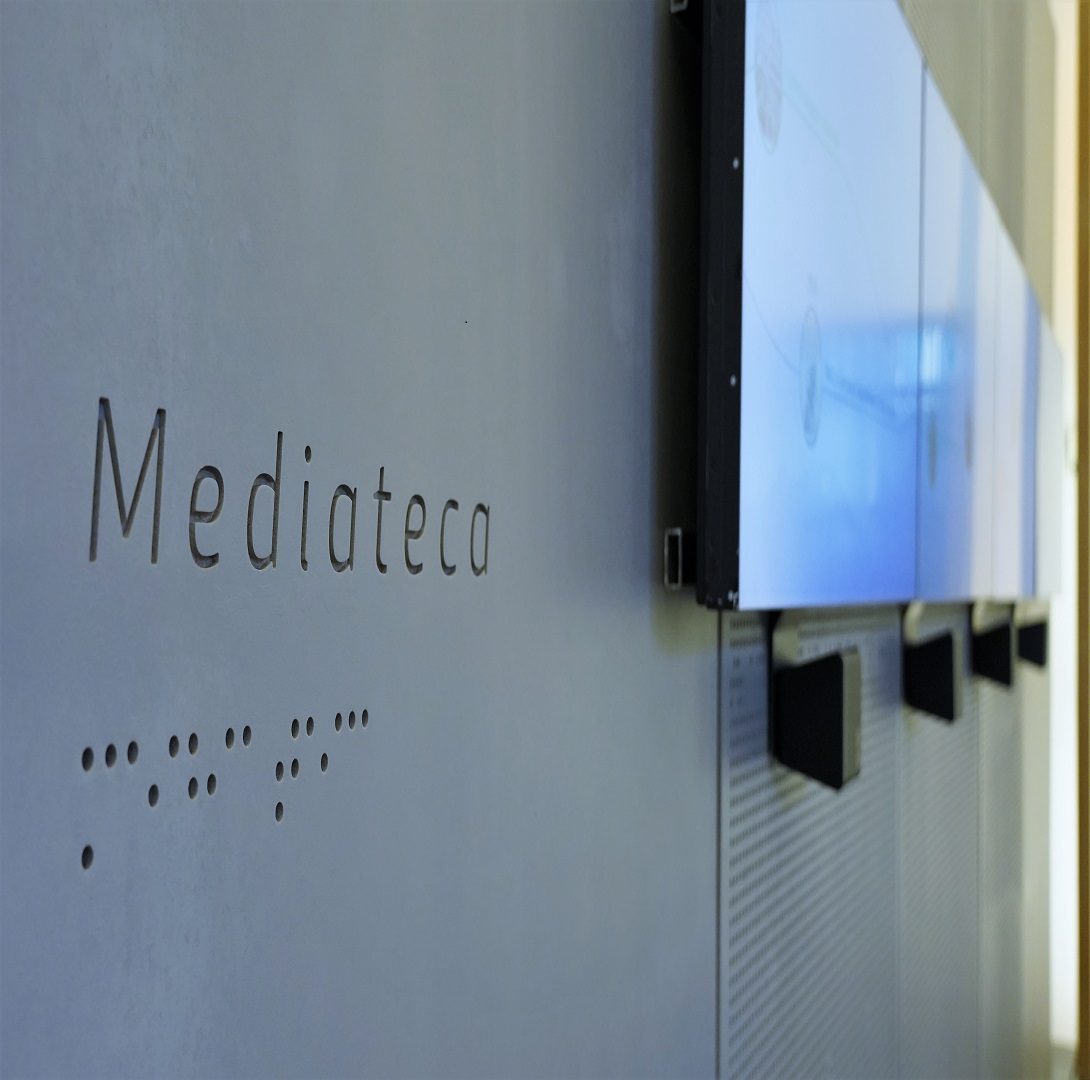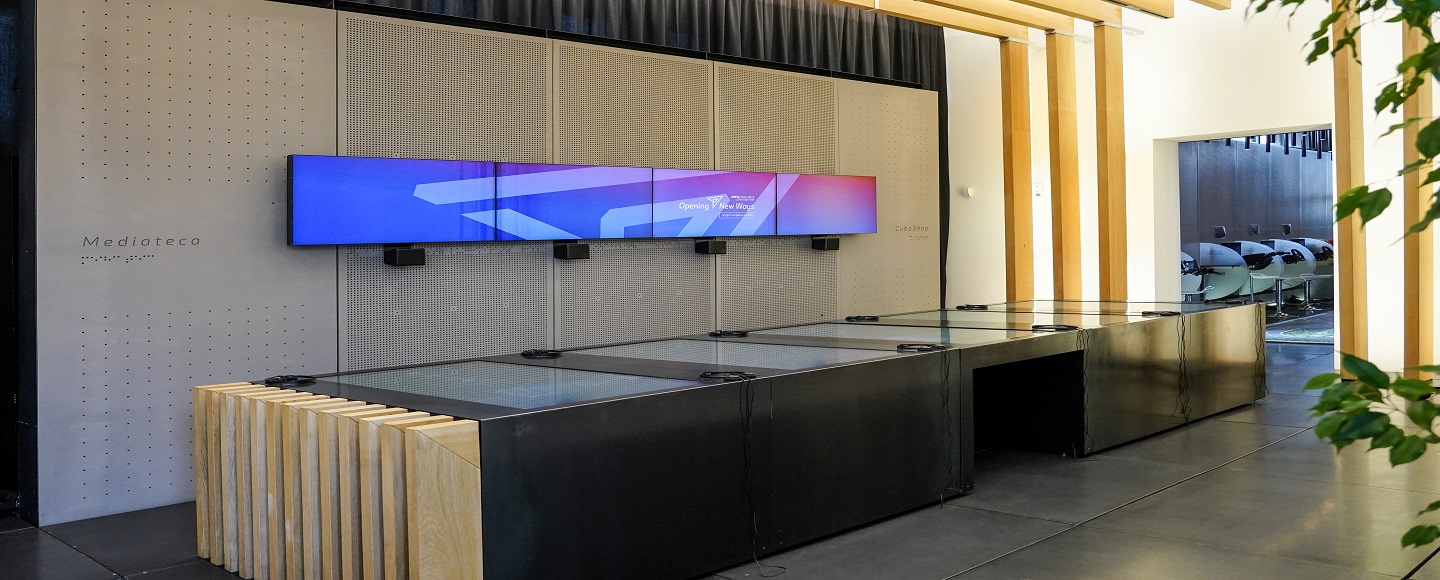
Mediateque
The Mediateque is the space where the historical heritage of the Unipol Group is preserved, enhanced, and made accessible through the use of advanced technologies.
MULTIMEDIA TABLES
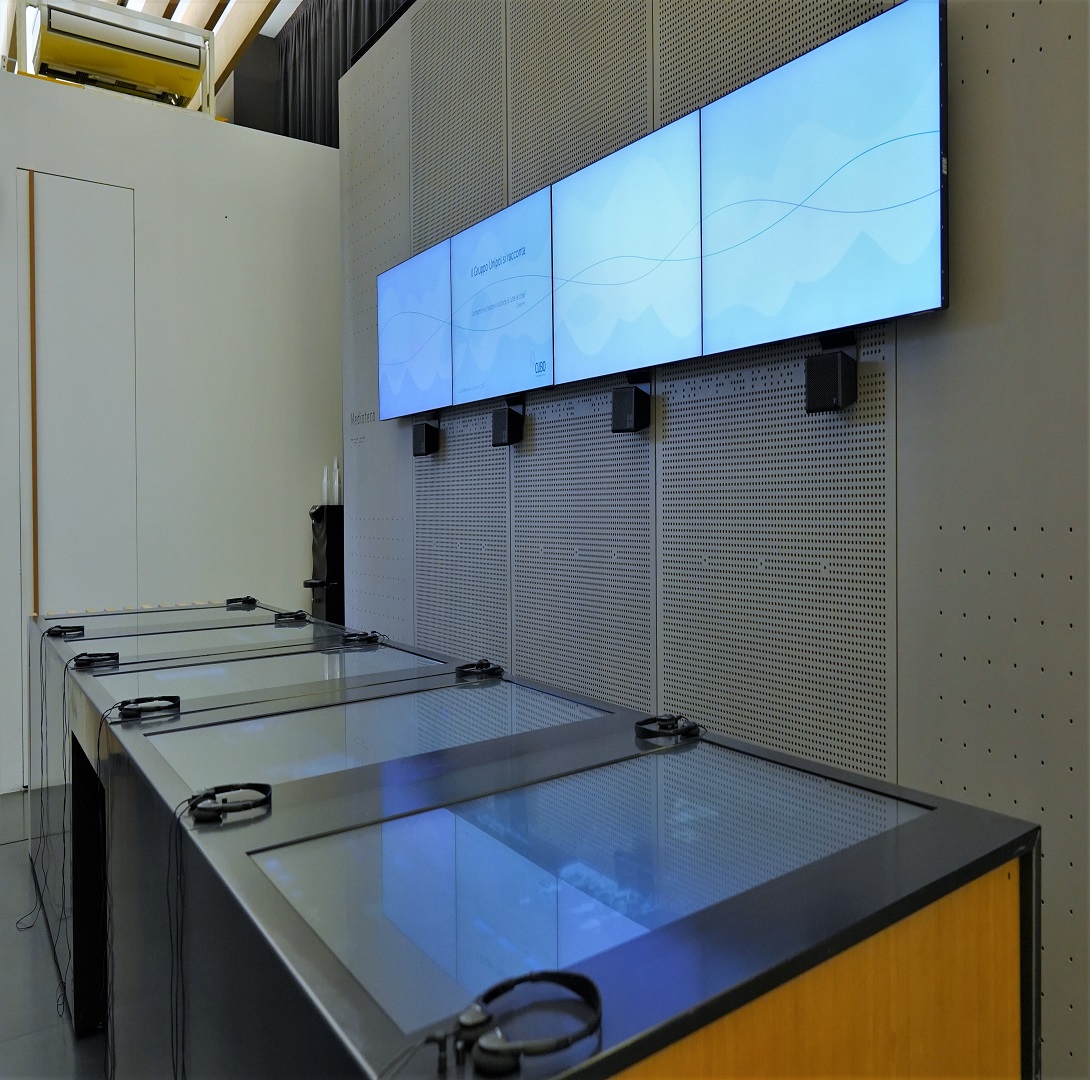
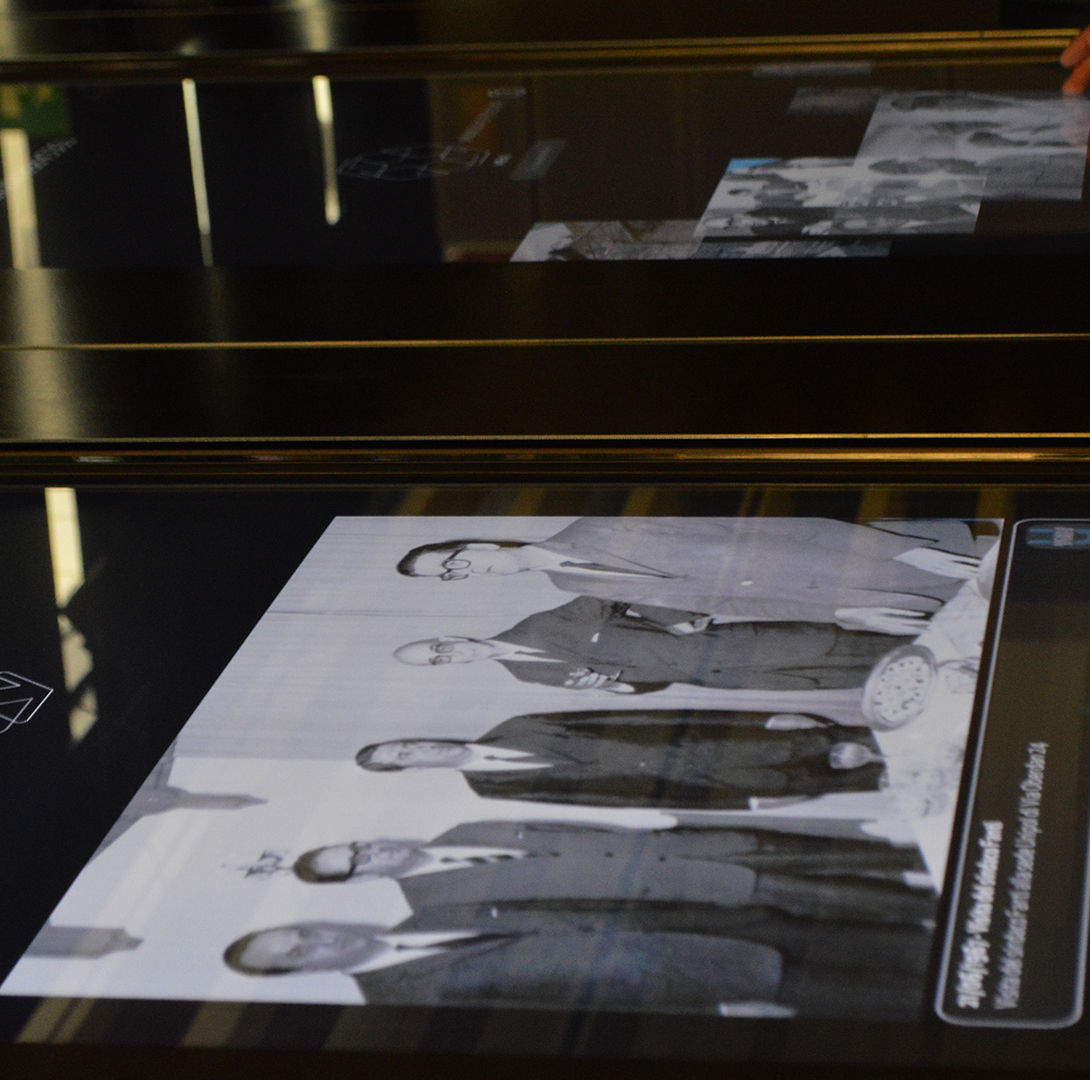
Five 56” touch tables with 4K touchscreen technology, equipped with headphones for audio content, allow visitors to explore the history and evolution of the Unipol Group through various applications.
The materials that constitute the company’s memory—policies, financial statements, correspondence, advertising materials, photographs, and corporate publications—are available on the multimedia tables in their digital form.
The tables also host applications dedicated to other CUBO activities: Mediarte, which contains the archive of exhibitions held in the museum’s Art spaces, enriched with connections, narratives, and critical insights; CUBO Gallery, featuring photographic documentation of the corporate museum’s initiatives; Riga dritto, an interactive multimedia game dedicated to road safety.
VIDEOWALL
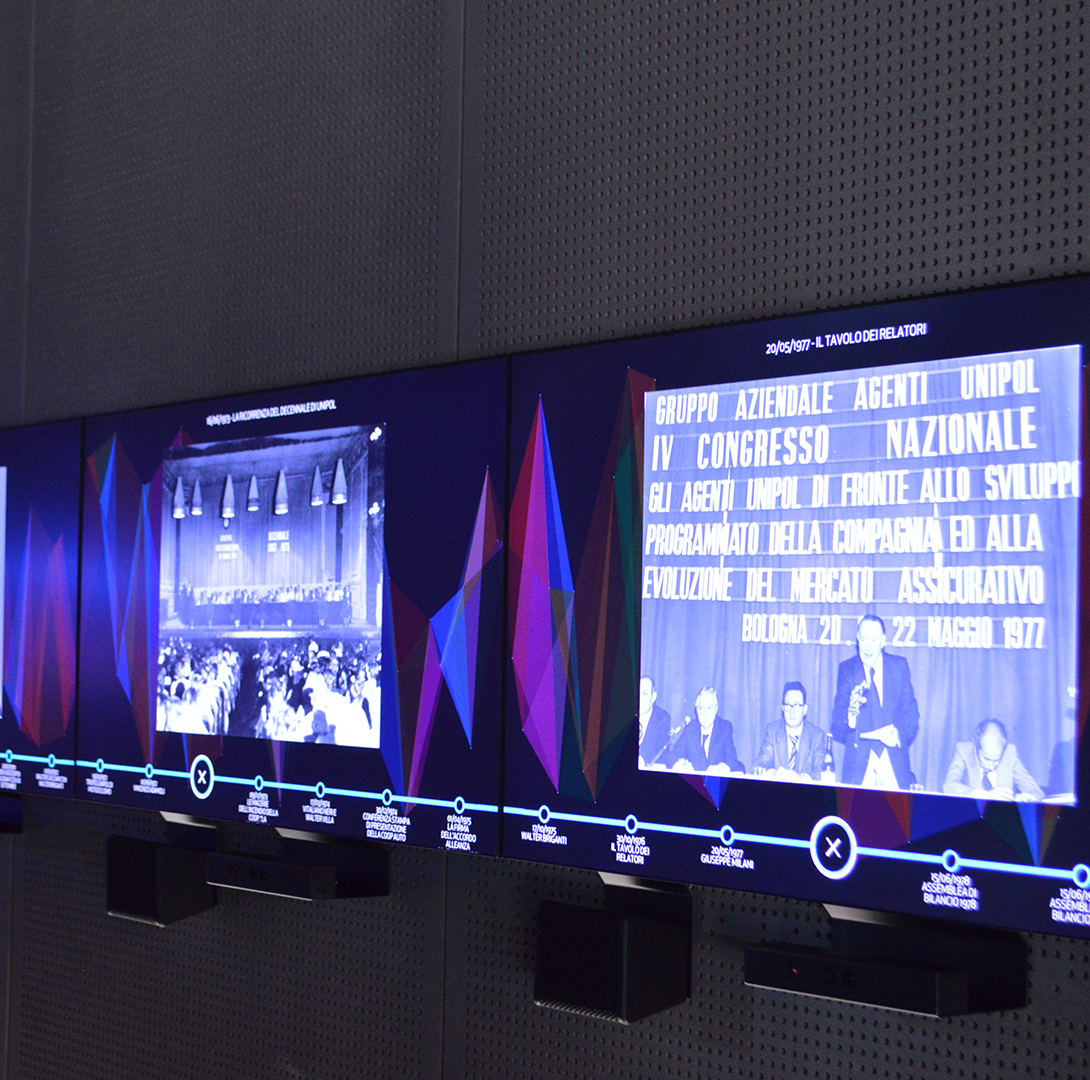
Four 46” full HD 1920×1080 LCD monitors, equipped with Kinect-type motion sensors and audio speakers, enrich the multimedia experience. They display a visual narrative that links the development of the Unipol Group with the political, social, and economic history of Italy, highlighting the connections between corporate events and the broader historical context.
HISTORICAL ARCHIVE
Alongside the digital dimension, a selection of original documents and objects recounts the journey of the Unipol Group from its origins to the present day. The exhibition design creates a narrative continuity between physical and digitized heritage, transforming the historical archive into an integrated experience.
On the multimedia tables, the archive expands and connects: documents displayed only partially can be virtually browsed page by page; invisible content becomes accessible; each object links to other materials, opening new perspectives for interpretation.
In this dialogue between physical presence and digital dimension, technology does not replace the original—rather, it makes it accessible, readable, and alive. Thus, the archive reveals itself not as a simple repository of the past, but as a dynamic system of knowledge, constantly evolving, inviting visitors to play an active role in discovery.